
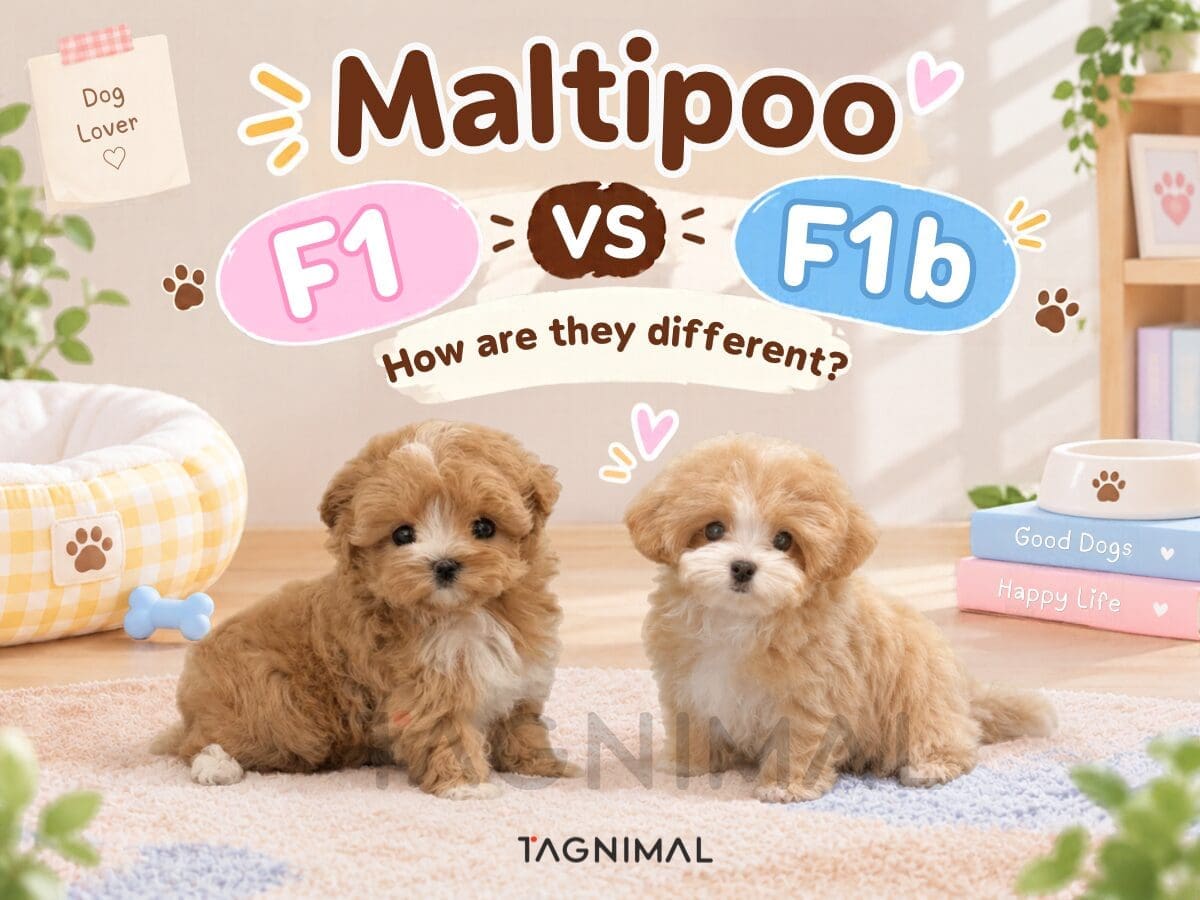
If you are getting to know Maltipoo and come across terms like “F1” and “F1b,” you might be wondering, “What exactly is the difference?” In reality, F1 and F1b simply refer to the breeding generation; they don’t indicate which one is cuter or superior. However, each generation has a distinct genetic background and set of characteristics. Let’s break it down simply.
1. What is an F1 Maltipoo?
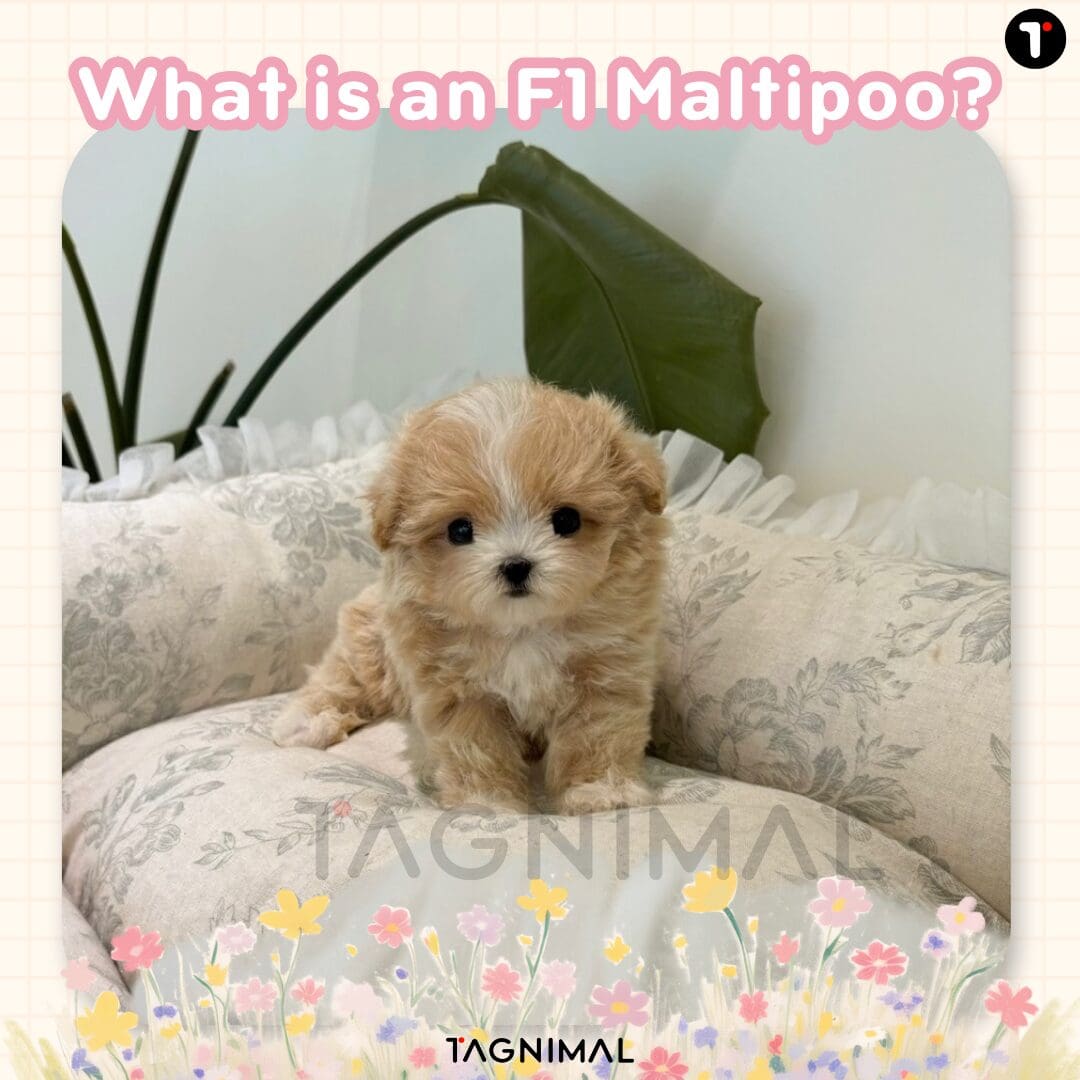
The F1 generation is the direct result of crossing a Maltese with a Poodle—essentially combining the best qualities of both breeds into one charming companion. The Maltese is known for being adorable, gentle, and a friendly, people-oriented companion, while the Poodle is celebrated for its intelligence, quick learning ability, and love for human interaction. The Maltipoo inherits this unique blend of traits, resulting in a distinctive and lovable hybrid; individual dogs can vary significantly in appearance, coat color, and fur texture.
2. What is an F1b Maltipoo?
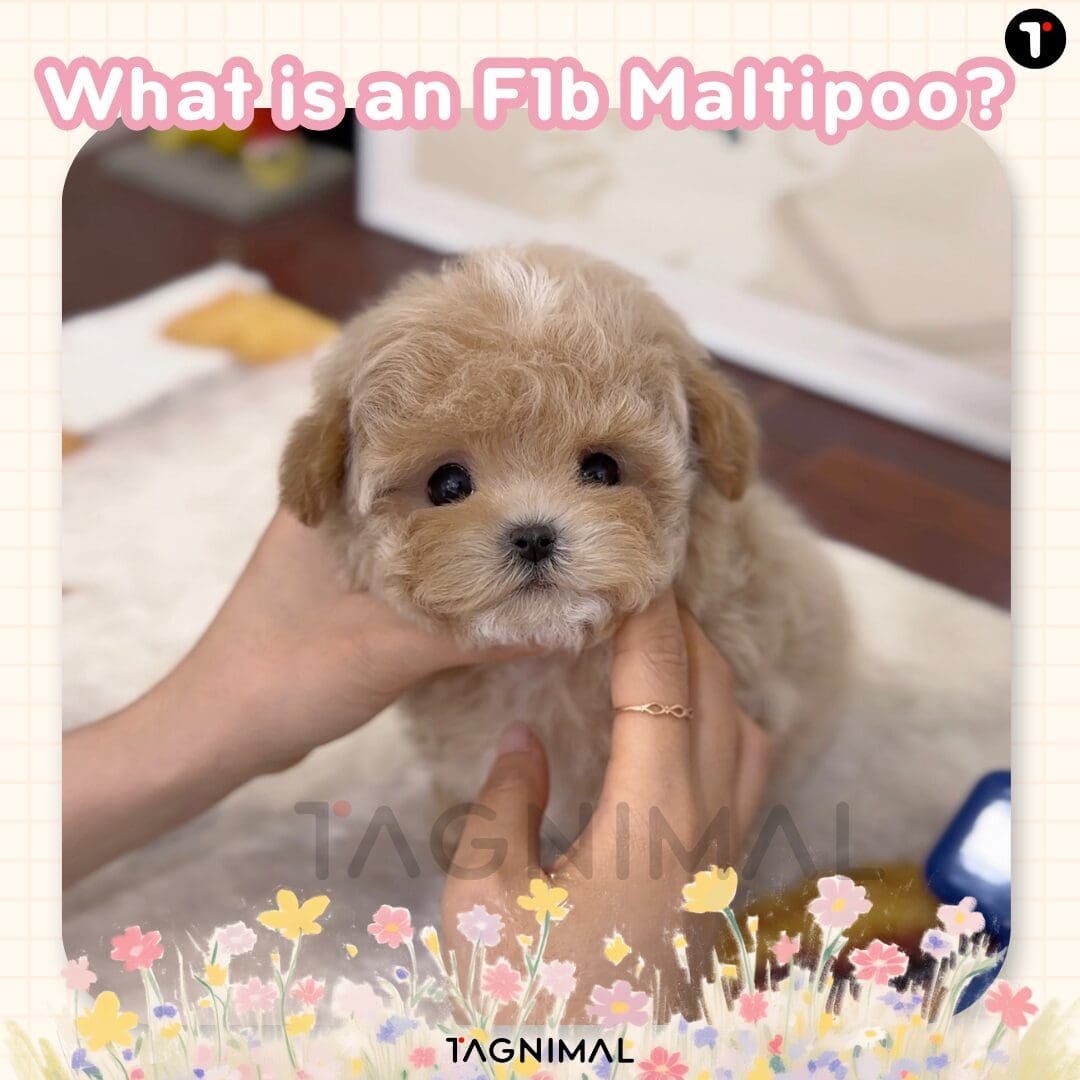
This is where the letter “b” comes into play. It stands for “backcross,” which refers to breeding an F1 hybrid back to one of the original parent breeds. In the case of the Maltipoo F1b, an F1 Maltipoo is typically bred back to a Poodle; consequently, in terms of approximate genetic composition, the F1b offspring will have a higher proportion of Poodle lineage.
F1 → Maltese 50% + Poodle 50%
F1b → Maltipoo F1 50% + Poodle 50%
So, it works out to approximately 25% + Poodle 75%
3. What’s the difference when it comes to fur?
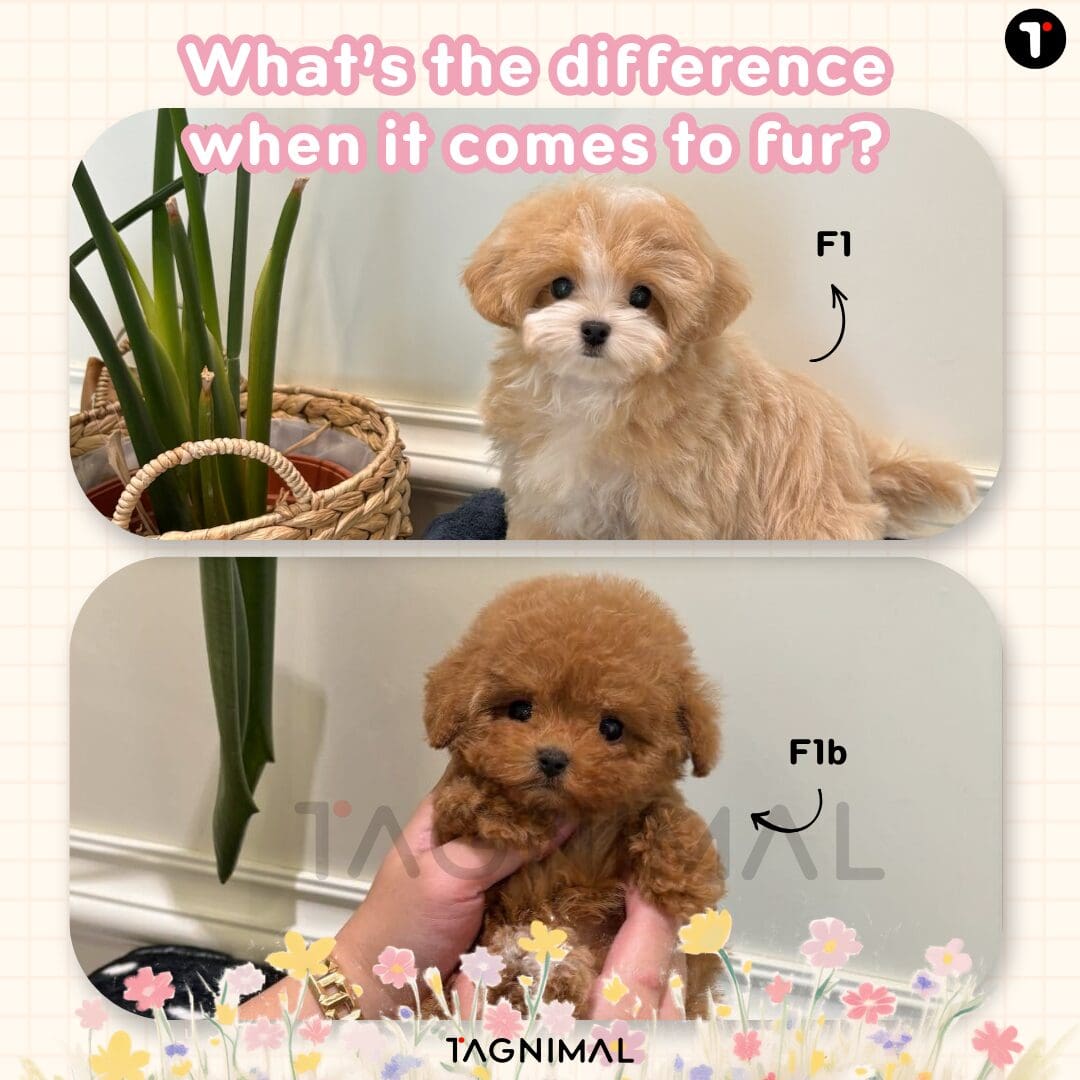
This is one of the aspects that interests people the most. Maltipoos can have a wide variety of coat types—ranging from straight to wavy or curly—because they inherit traits from both the Maltese and the Poodle. In the case of F1b generations, which have a higher proportion of Poodle genetics, the coat tends to lean more towards the Poodle style. Generally, Maltipoos are low-shedding dogs, though their specific coat characteristics depend on the genetics inherited from their parents; a curlier or wavier coat and minimal shedding—traits often associated with Poodle ancestry—are features many people love. However, the term “hypoallergenic” does not mean completely free of allergens, as no dog breed is 100% allergen-free. Therefore, if you are prone to allergies, it is recommended to spend some actual time with the dog before making a decision, so you can see how well you get along.
4. Is there a difference in temperament between F1 and F1b?
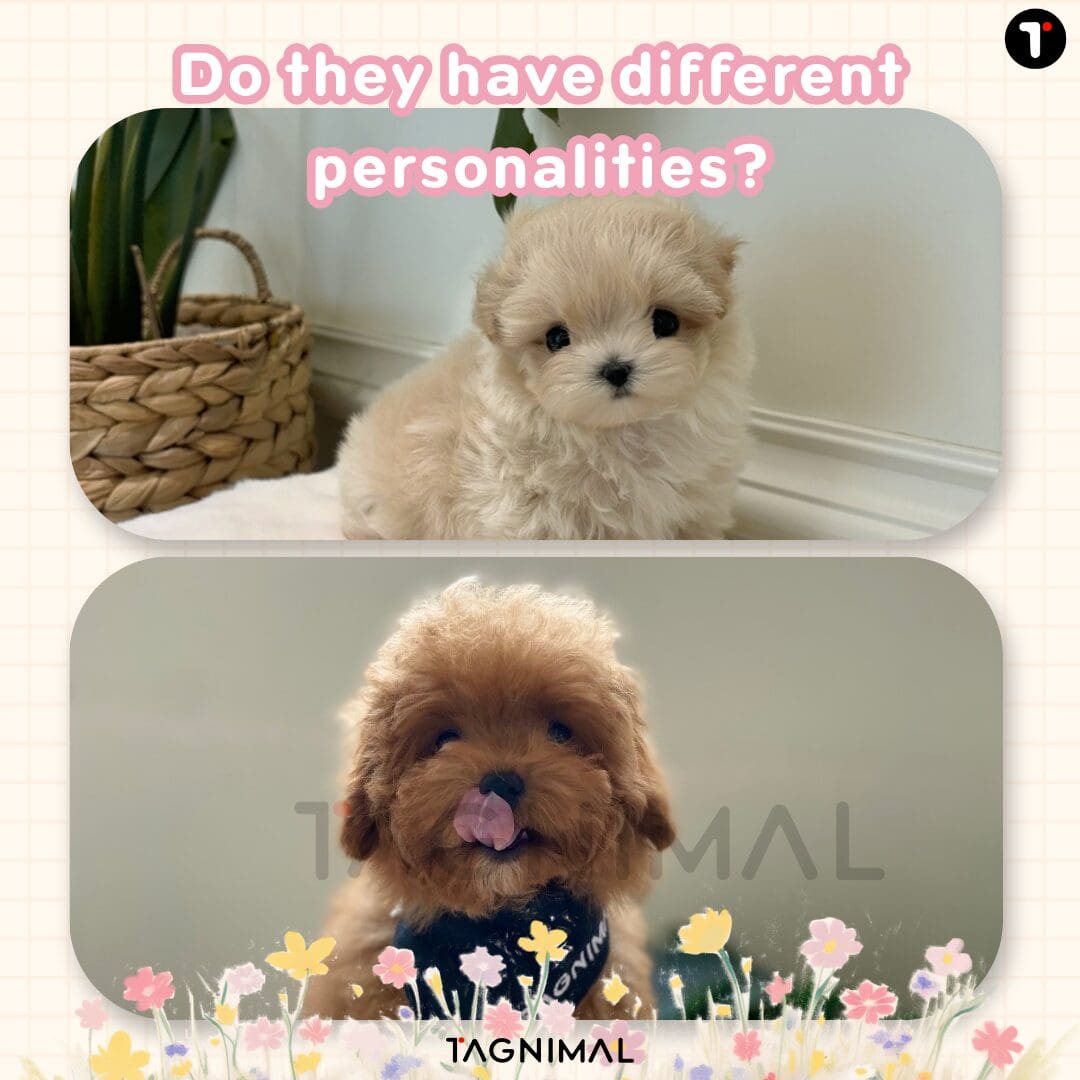
It is worth noting that the F1 or F1b designation does not strictly dictate a dog’s temperament. Generally, Maltipoo’s are friendly, cheerful, and intelligent dogs that enjoy interacting with people. Early socialization, upbringing, and individual experiences also play significant roles in shaping each dog’s personality. Therefore, whether an F1 or an F1b, they can all grow up to be adorable, affectionate little companions and wonderful four-legged friends for the family.
The Bottom Line
If you are looking for a four-legged best friend and are interested in Maltipoos but aren’t sure whether an F1 or F1b would better suit your lifestyle, feel free to reach out for advice. We want the process of welcoming a new family member to be simple and safe. You can also view more details about the puppies on the Tagnimal app.